Do you have a project you wish to discuss?
Send us your requirements for a speedy quotation.
Contact Us
"*" indicates required fields


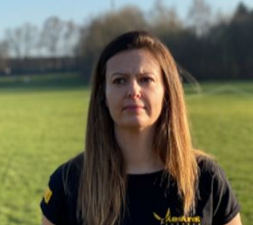
By Stacey Dix, Founder of Kestrel Surveys
Taking flight
After nearly a decade in traffic surveying, I saw an opportunity to enhance what we could offer clients. Traditional methods – manual counting and fixed cameras – work perfectly well for straightforward junctions and remain valuable tools in our industry. But for large, complex sites with six or seven roads, the limitations became apparent.
The traditional approach for these larger junctions relied on a technique called ‘furnessing’: standing on each arm for 15 minutes, counting cars turning left versus the rest, then using formulas to estimate overall traffic flow. It was workable, but we had to be transparent with clients that it wasn’t 100% accurate. Queue measurement presented similar challenges. Debates would arise about definitions – was a queue only stationary vehicles, or did slow-rolling traffic count? At what speed threshold? These inconsistencies affected data quality and created frustration on all sides. To this day many companies still use this techni
I believed drone technology could address these specific challenges while complementing our existing methods. So I obtained my PFCO (Permission for Commercial Operations) qualification and pioneered the use of drones at my previous company, focusing on those complex sites where traditional methods struggled. The results were compelling: complete aerial footage of entire junctions, accurate queue measurements regardless of length, and comprehensive visual data that clients could review themselves. For large, multi-arm roundabouts, the improvement was transformative.
Then COVID hit, and like many others, I was made redundant overnight. But I had a unique skill set and a conviction that this technology could reshape the industry. During lockdown, I founded Kestrel Surveys.
Building a new standard
Growing a specialist business during a pandemic required creative thinking. I started delivering online presentations to educate potential clients about the benefits of drone surveying. Many were sceptical – “we’ve done it this way for years, why change?” – so I focused on demonstrating value. I posted aerial footage of roundabouts on LinkedIn, and the response surprised me. Videos that I thought were niche content were getting thousands of views from exactly the right audience: transport planners, civil engineers, local authorities.
The business grew steadily. What started as a hope for one or two jobs a month evolved into something much bigger. Today, drone surveying is widely recognised as a legitimate methodology, and many traffic survey companies now advertise drone services. But there’s a crucial distinction in how we operate.
Drone operator ≠ drone expert
Here’s what I’ve learnt: you can’t just buy a drone and call yourself a drone survey company. You need deep industry expertise first, then apply the technology strategically to enhance that knowledge. The drone is a sophisticated tool, but it’s only as valuable as the operator’s understanding of the work itself.
That’s Kestrel’s edge. We offer the full range of traffic survey methods – manual counting, fixed cameras, and drones – but we’re known for our drone expertise. We can advise clients on the most effective approach for their specific needs. Sometimes that’s a simple manual count. Often, for complex junctions and detailed movement analysis, it’s drone surveying. The key is understanding when each method delivers the best results.
Setting the record straight
The main barrier I encounter is cost. Clients often assume drones are prohibitively expensive, but depending on the data required, they can actually be more cost-effective than traditional methods. The real value, though, isn’t just in price – it’s in accuracy and flexibility. Clients receive complete visual records they can review indefinitely, rather than estimated data from partial observations.
There are also legal concerns. People ask whether it’s legal to film in public spaces, whether we’re capturing number plates, or whether we can survey near schools. The answer is straightforward: we operate fully within Civil Aviation Authority regulations, maintain comprehensive insurance, and are audited annually. We’re not filming individuals or vehicles at a level of detail that raises privacy concerns – just capturing traffic movement patterns from up high.
Charting my own path
The traffic surveys industry, like many technical fields, has historically been male-dominated. When I started, I didn’t know any other female drone pilots. But rather than viewing that as a barrier, I focused on building expertise and delivering exceptional service. As Kestrel’s profile has grown, I’ve connected with more women in the field, and I’m encouraged by the shift I’m seeing.
My advice to women considering leadership in emerging technologies is to focus relentlessly on your craft. Build genuine expertise, understand your market deeply, and let the quality of your work speak for itself. The technical nature of the industry is an advantage, not an obstacle – there’s less room for subjective judgment when your results are measurably superior.
New horizons
Excitingly, Kestrel has now evolved beyond traffic surveys. We’ve recently completed land mapping to help assess flooding with councils in Wales, and we’re expanding into construction applications. The technology continues to advance rapidly – AI-enabled drones that can count and classify vehicles in real-time are on the horizon, which will further streamline data collection.
But technology alone isn’t the goal. What I’m building is a company with uncompromising standards: legally compliant, properly insured, thoroughly trained, and consistently reliable. We don’t cut corners, and we only take on work we can deliver to the highest standard. That approach has allowed us to work with major clients and build a reputation that brings repeat business and referrals.
The view from up top
Starting a business during a pandemic while navigating significant personal challenges taught me resilience. There were moments of doubt, certainly, but I kept moving forward. Now, I have the confidence to be selective about the projects we take on and the clients we work with.
Success, for me, isn’t just about growth – it’s about building something sustainable and meaningful. I want Kestrel to be known for technical excellence, integrity, and innovation. I want clients to trust that when they work with us, they’re getting the most accurate data, delivered professionally and in full regulatory compliance.
Looking ahead, I’m excited about where this technology can take us. But more than that, I’m proud of what we’ve already built: a business that combines cutting-edge technology with deep industry knowledge, led by a team that genuinely cares about getting it right. That’s the foundation everything else is built on – and that’s what will drive us forward for the next decade and beyond.
Send us your requirements for a speedy quotation.
"*" indicates required fields
Want to discuss something more specific? Contact us, and we will be more than happy to help you.
"*" indicates required fields

Requirement A major football venue, working with a transport consultancy, needed to understand car park operations across a very large ar...
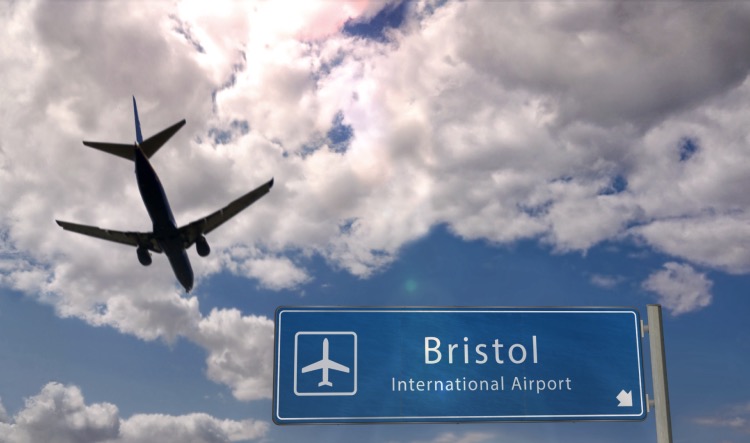
Requirement North Somerset Council wanted to understand the scale of illegal parking operations surrounding Bristol Airport during the bu...
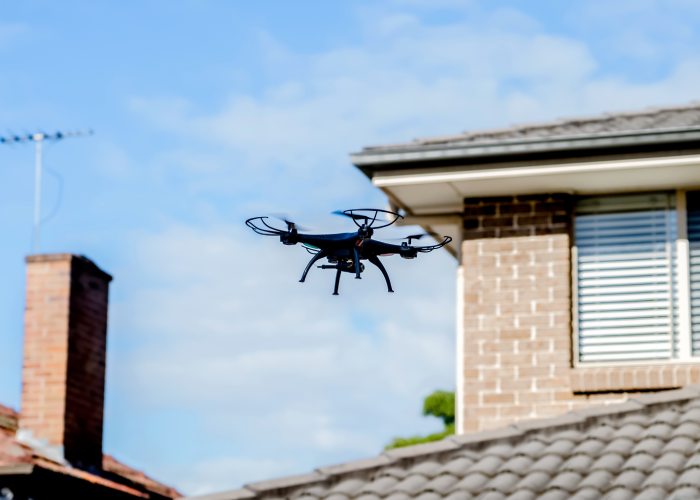
In the United Kingdom, the process of planning and development can be a contentious affair. From disputes over land use to concerns